Cannabis Ransomware Survival Guide 2026: Before, During, and After an Attack


The 380,000 Customer Wake-Up Call
In late 2024, STIIIZY—one of California's largest cannabis retailers—sent breach notifications to 380,000 customers. Names, addresses, birth dates, driver's license numbers, passport numbers, photographs, medical cannabis card details, and transaction histories were all exposed through a compromise of their point-of-sale vendor.
The attack was attributed to the Everest ransomware group, which has since set its sights squarely on the cannabis industry. Within one week of the STIIIZY disclosure, a second cannabis operator appeared on Everest's dark web victim blog—listed as a client of the first victim's software vendor.
 CannaSecure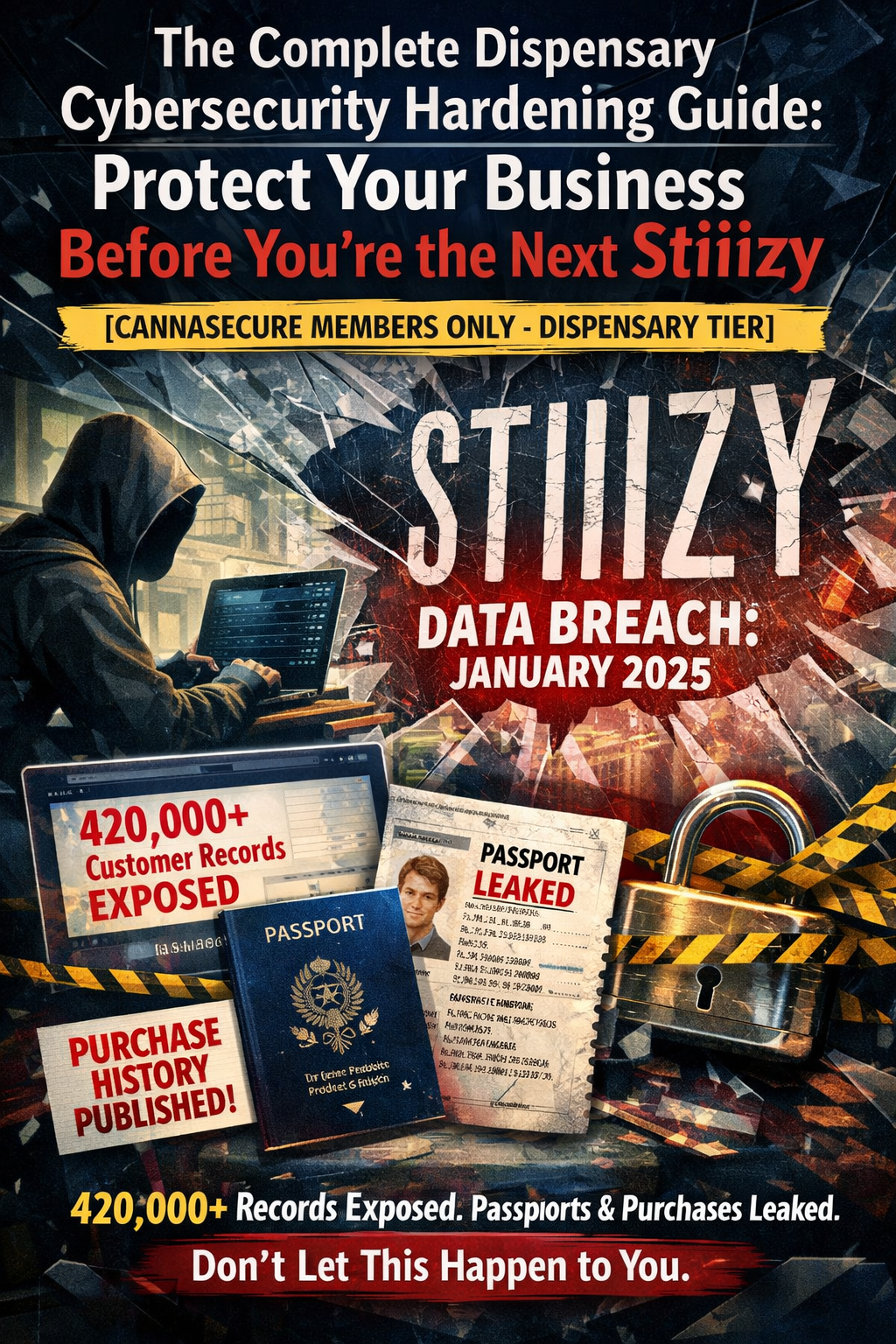
This wasn't an isolated incident. It was a warning shot.
If you're operating a dispensary, cultivation facility, processor, or any cannabis business in 2026, ransomware isn't a distant threat—it's an operational reality you need to prepare for right now.
Why Cannabis Businesses Are Prime Ransomware Targets
You're Holding Extremely Valuable Data
Cannabis businesses collect and store data that's worth its weight in gold on the dark web:
Customer Data: Government-issued IDs, medical cannabis cards, addresses, purchase histories, and patient health information (HIPAA-protected for medical dispensaries)
Business Data: Seed-to-sale tracking records, compliance documentation, financial records, employee information, vendor contracts
Operational Data: Metrc/BioTrack credentials, banking details, cash management schedules
For medical dispensaries, you're essentially operating a pharmacy without the cybersecurity budget of CVS or Walgreens.
You're Operating with Limited Resources
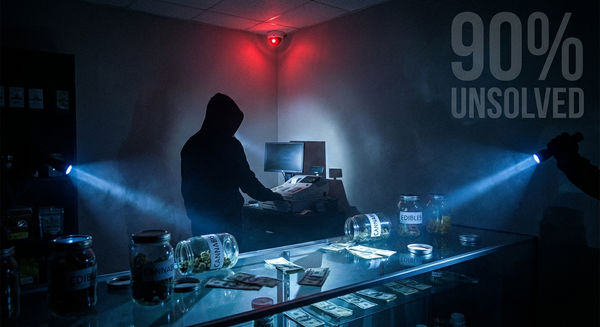
According to the Cannabis Information Sharing & Analysis Organization (Cannabis ISAO), most cannabis businesses lack dedicated IT staff, let alone cybersecurity expertise. When you ask cannabis operators about security, they show you their camera room and armed guards—but the real threat is someone in Ukraine or Russia.
You're Dependent on Third-Party Vendors
The cannabis industry relies heavily on external platforms for compliance tracking, seed-to-sale inventory management, payment processing, and customer databases. Each vendor creates a potential attack vector. MJ Freeway, a compliance software provider, suffered repeated breaches that disrupted dispensaries across multiple states. When your critical vendor gets hit, you get hit.
60% of Small Businesses Fold Within 6 Months of a Breach
This statistic from the National Cybersecurity Alliance should terrify every cannabis operator. The combination of financial losses, regulatory penalties, reputational damage, and customer distrust creates a perfect storm that many businesses don't survive.
2025-2026 Ransomware Landscape: The Numbers You Need to Know
Understanding the current threat environment helps you make informed decisions about your security investments.
Attack Frequency: 69% of organizations experienced at least one ransomware attack in 2025. Small and medium businesses faced ransomware in 88% of all breaches they experienced.
Financial Impact: The average cost of a ransomware attack (excluding ransom payment) is $1.53 million. When you factor in ransom payments, the average total cost reaches $5.5-6 million for enterprises.
Ransom Payments: The median ransom payment in 2025 was $1 million—though this dropped 50% from the previous year. For smaller businesses, median payments hover around $115,000-267,500.
Recovery Time: The average recovery time from a ransomware attack is 24.6 days. Can your dispensary afford to be down for nearly a month?
Success Rate for Payers: Only 49% of organizations that paid the ransom actually regained access to all their data. 64% of victims chose not to pay, instead relying on backups and incident response.
The Big Game Hunting Trend: While overall ransomware payments dropped 35% in 2024 to $813 million, average payout sizes increased dramatically. Attackers are targeting bigger fish—and cannabis businesses with extensive customer databases qualify.
The Everest Threat: Cannabis Industry on Notice
The Everest Ransomware group has specifically targeted the cannabis industry. According to the Cannabis ISAO, Everest has evolved from a traditional ransomware operator into an "initial access broker"—meaning their role is to gain unauthorized access to victim organizations and then sell that access to other gangs who conduct the actual ransomware attack.
This business model is particularly dangerous because:
- Multiple attackers may have your credentials before you even know you've been compromised
- Supply chain attacks are amplified when access brokers target vendors serving multiple cannabis businesses
- Dwell time is decreasing as attackers begin encryption within hours of initial entry
Phase 1: Before the Attack—Building Your Defenses
Prevention isn't about being impenetrable. It's about making yourself a harder target than the dispensary down the street.
Implement the 3-2-1-1-0 Backup Rule
This is your ultimate safety net when everything else fails:
3 copies of your data
2 different storage types (local + cloud)
1 copy offsite
1 copy offline or immutable (cannot be deleted or encrypted by ransomware)
0 errors after backup verification testing
In 2025, nearly 98% of ransomware cases involved attackers attempting to corrupt or delete backups. If your backups are connected to your network, they're not safe.
Cannabis-Specific Backup Priorities:
- Metrc/BioTrack export data (daily)
- Customer database (daily)
- Financial records (daily)
- Compliance documentation (weekly)
- Employee records (weekly)
- Vendor contracts and agreements (monthly)
Secure Your Point-of-Sale Systems
POS systems are the #1 attack vector for dispensary breaches. The STIIIZY breach came through their POS vendor.
Essential POS Security:
- Segment POS systems on their own network (VLAN isolation)
- Disable unused services and ports
- Change default credentials (this still catches businesses)
- Enable encryption for data at rest and in transit
- Limit which employees can access POS admin functions
- Monitor for unusual activity (large exports, off-hours access)
Implement Multi-Factor Authentication (MFA) Everywhere
MFA blocks 99.9% of automated credential attacks. Enable it on:
- All employee email accounts
- Metrc/BioTrack and compliance platforms
- Banking and financial systems
- POS administrative access
- Cloud storage and backups
- Any system accessible remotely
Train Your Staff—They're Your First Line of Defense
95% of breaches involve human error. One Backcross Solutions client almost lost $15,000 when an employee received a fake email from the "CEO" asking them to cut a check. They caught it at the last second.
Monthly Training Should Cover:
- Recognizing phishing emails (suspicious links, urgent requests, unusual sender addresses)
- Verifying requests for money or sensitive information through a second channel
- Reporting suspicious activity immediately without fear of punishment
- Password hygiene (no reuse, minimum 16 characters, password manager)
- Physical security (no shared credentials, lock workstations, challenge unknown visitors)
Patch Everything, Constantly
Ransomware groups exploit unpatched vulnerabilities religiously. The window between vulnerability disclosure and active exploitation is now measured in days, not weeks.
Patch Priority:
- Internet-facing systems (immediately)
- POS and payment systems (within 48 hours)
- Compliance and seed-to-sale systems (within one week)
- Internal workstations (within two weeks)
Establish Vendor Security Requirements
Your security is only as strong as your weakest vendor.
Questions to Ask Every Technology Vendor:
- Do you have SOC 2 Type II certification?
- How do you handle security incidents?
- What is your notification timeline for breaches?
- Do you carry cyber insurance?
- Can you provide evidence of recent penetration testing?
- Who has access to our data within your organization?
Phase 2: During the Attack—Your First 24 Hours
The actions you take in the first hours of a ransomware attack determine whether you recover in days or weeks.
Hour 0-1: Detection and Initial Response
STOP. BREATHE. DON'T PANIC.
The worst decisions happen when people panic. Follow your plan (you do have a plan, right?).
Immediate Actions:
- Isolate affected systems immediately
- Disconnect from network (unplug Ethernet, disable WiFi)
- Do NOT power off (this may destroy forensic evidence)
- If multiple systems are affected, consider isolating at the network switch level
- Document everything
- Screenshot ransom notes
- Record exact time of discovery
- Note which systems are affected
- Photograph any physical indicators
- Activate your incident response team
- Internal IT lead
- Business owner/executive decision maker
- Legal counsel (privilege important for liability protection)
- Cyber insurance provider (they may have preferred vendors)
Hour 1-4: Assessment and Containment
Determine the Scope:
- Which systems show encryption?
- Are backups accessible and clean?
- Is Metrc/BioTrack data affected?
- Can customers still make purchases?
- What customer data may have been accessed?
Contain the Damage:
- Disable compromised user accounts
- Block malicious IP addresses if identified
- Preserve logs before they're overwritten
- Identify the ransomware variant if possible (this helps determine decryption options)
Hour 4-24: Decision Making
The Ransom Question:
Do NOT make this decision in hour one. You need information first.
Before Considering Payment:
- Can you recover from backups? (25% of victims recovered without paying)
- Is there a known decryption tool? (check nomoreransom.org)
- What does your cyber insurance cover?
- What are the legal implications in your state?
- Even if you pay, only 49% get full data back
Important Legal Consideration: Some states are moving toward legislation that bans or restricts ransomware payments. Florida and North Carolina have already passed laws. The UK proposed banning public sector ransom payments in 2025. Check with legal counsel before making any payment decisions.
Notification Requirements:
Cannabis businesses often have multiple notification obligations:
- State cannabis regulators (Metrc/BioTrack breach may have specific reporting requirements)
- State data breach laws (varies by state, often 30-72 hours after discovery)
- HIPAA (if medical dispensary, 60-day notification to HHS)
- Law enforcement (FBI IC3, CISA, local FBI field office)
- Affected customers (timeline varies by state law)
Phase 3: After the Attack—Recovery and Hardening
Week 1: Restore Operations
Recovery Priority for Cannabis Businesses:
- Metrc/BioTrack compliance (regulatory continuity)
- Point-of-sale systems (revenue generation)
- Security cameras and access control (physical security)
- Customer database (loyalty programs, medical records)
- Accounting and payroll (financial operations)
- Marketing and communications (customer notification)
Clean Recovery Principles:
- Restore from verified clean backups only
- Rebuild systems from known-good images when possible
- Don't just "unlock" encrypted files—the malware may still be present
- Scan all restored data for dormant threats
- Change all passwords across the organization
Week 2-4: Post-Incident Analysis
Conduct a thorough investigation:
- How did attackers gain initial access?
- How long were they in your systems before encryption? (dwell time)
- What data was exfiltrated before encryption?
- Which security controls failed?
- Which worked?
Document Everything for:
- Insurance claims
- Regulatory reports
- Future prevention
- Staff training updates
Month 2+: Long-Term Hardening
Based on Lessons Learned:
- Close the specific vulnerability that was exploited
- Implement additional controls to detect similar attacks earlier
- Update incident response procedures based on what worked/didn't
- Increase security budget (this is now justifiable to ownership)
- Consider cyber insurance if you don't have it
- Schedule regular tabletop exercises to practice response
Your 10-Point Cannabis Ransomware Readiness Checklist
Use this checklist to assess your current preparedness:
- [ ] Backup Strategy: Immutable, offline backups tested within last 30 days
- [ ] MFA Deployed: All critical systems protected with multi-factor authentication
- [ ] Network Segmentation: POS systems isolated from general network
- [ ] Patch Management: All systems current within policy timeframes
- [ ] Employee Training: Security awareness training within last 90 days
- [ ] Incident Response Plan: Written, documented, and tested within last year
- [ ] Vendor Assessment: Security questionnaires completed for critical vendors
- [ ] Insurance Review: Cyber insurance policy covers ransomware, reviewed annually
- [ ] Compliance Documentation: Metrc/BioTrack data exported and backed up daily
- [ ] Contact List: Incident response contacts (legal, insurance, forensics, FBI) documented and accessible offline
Score Yourself:
- 9-10: Strong posture. Keep testing and improving.
- 6-8: Moderate risk. Address gaps within 30 days.
- 3-5: High risk. Prioritize security improvements immediately.
- 0-2: Critical risk. Stop reading and start implementing today.
Resources for Cannabis Businesses
Free Resources:
- Cannabis ISAO: Industry-specific threat intelligence and best practices (cannabisisao.org)
- CISA Stop Ransomware: Federal guidance and tools (cisa.gov/stopransomware)
- No More Ransom: Free decryption tools for known ransomware variants (nomoreransom.org)
- FBI IC3: Report incidents and access resources (ic3.gov)
Tabletop Exercises:
The best way to deal with a ransomware attack is to practice having one. As Lisa Plaggemier, Executive Director of the National Cyber Security Alliance, stated after the MGM and Caesars attacks: "The best way to deal with a ransomware attack is to practice having one, to do tabletop exercises."
Conduct quarterly tabletop exercises where your team walks through a simulated attack scenario. This identifies gaps in your plans and ensures everyone knows their role when it's real.
The Bottom Line
Ransomware is no longer a question of "if" but "when" for cannabis businesses. The industry's combination of valuable data, regulatory complexity, vendor dependencies, and typically limited security resources makes it an attractive target for sophisticated criminal organizations.
But you're not powerless. The difference between businesses that survive ransomware and those that don't comes down to preparation:
- Backups that actually work when you need them
- Detection that catches attackers before encryption
- Response plans that prevent panic decisions
- Recovery procedures that get you operational quickly
The 60% of small businesses that fail after a breach aren't failing because ransomware is unstoppable. They're failing because they weren't prepared.
Don't be that statistic.
Ready to Level Up Your Cannabis Security?
This free guide covers the essentials, but there's much more to building a ransomware-resistant cannabis operation.
CannaSecure Members get access to:
- Complete incident response plan templates (cannabis-specific)
- Vendor security assessment questionnaires
- Employee training program materials
- State-by-state breach notification requirements
- Monthly threat intelligence briefings
- Tabletop exercise scenarios
- Direct access to cannabis security experts
[Join CannaSecure Today →]
CannaSecure is dedicated to protecting the cannabis industry from cyber threats. Follow us for the latest security insights, compliance updates, and practical guidance for cannabis operators.
Have questions about this guide? Drop a comment below or reach out—we're here to help the cannabis community stay secure.
Sources:
- Cannabis Information Sharing & Analysis Organization (Cannabis ISAO)
- Sophos State of Ransomware 2025
- Veeam 2025 Ransomware Trends Report
- CISA #StopRansomware Guide
- Verizon 2025 Data Breach Investigations Report
- MJBizDaily cannabis industry cybersecurity reporting
- FBI Internet Crime Complaint Center (IC3)