DEA CSOS Digital Certificates: The Enrollment Process
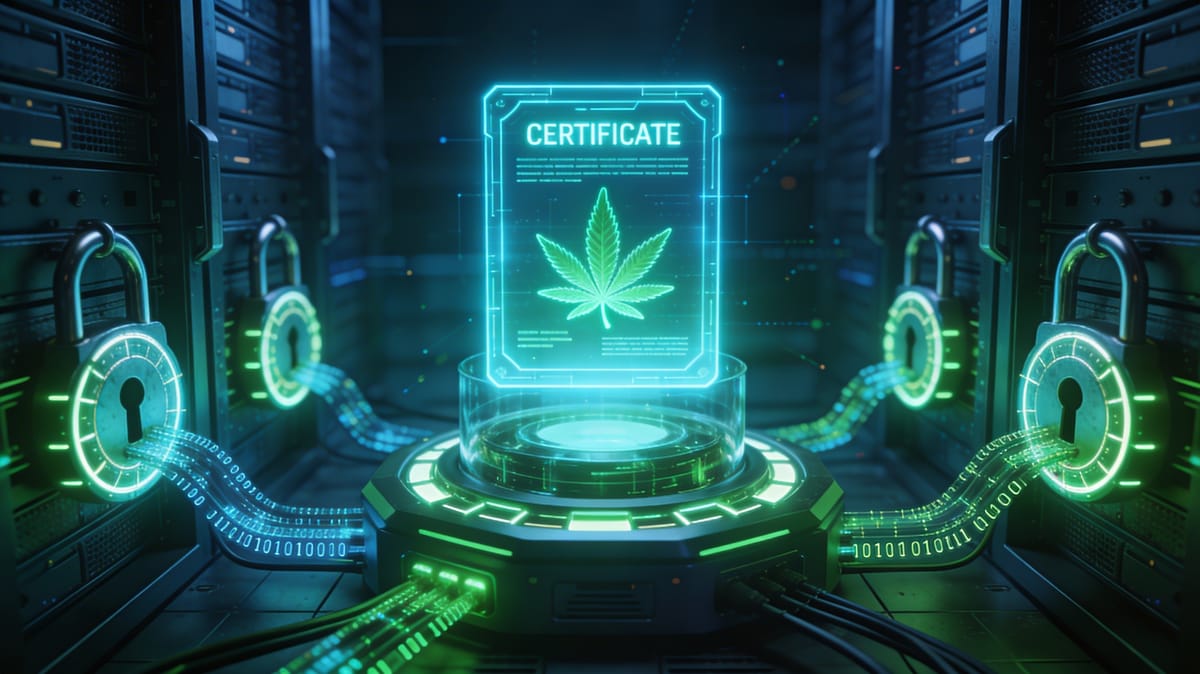
Before a single electronic order can be transmitted under CSOS, every purchasing entity must hold a valid CSOS digital certificate issued by the DEA's own Certification Authority (CA). The DEA made a deliberate choice to operate its own CA rather than relying on commercial certificate authorities — specifically because it needs the authority to revoke certificates from operators who fall out of compliance without depending on a third party.
The enrollment process works as follows:
- Submit a documented application to the CSOS Certification Authority — this requires proof of valid DEA registration, which itself is a separate requirement from state licensing
- Identity verification is conducted before any certificate is issued; in-person or online enrollment is available depending on the certificate level required
- Upon approval, the CA issues a digital certificate that binds your DEA registration identity to your cryptographic public key
- Certificates are valid for one year and must be renewed; expired certificates result in rejected orders
- Power of Attorney (POA) designations must be managed carefully — only DEA registrants and their formally designated POAs are eligible to hold CSOS certificates and sign orders
For multi-state operators (MSOs), this creates a significant operational challenge. Each DEA registration — which may differ by location or business entity — requires its own certificate enrollment. A cannabis MSO operating across 10 states with 30+ licensed locations isn't getting one certificate; they're managing a certificate portfolio that requires active lifecycle management, renewal tracking, and revocation protocols.
The Certificate Revocation List: A Critical but Overlooked Risk
One of the least-discussed but most operationally dangerous aspects of CSOS compliance is the Certificate Revocation List (CRL). The DEA's CA maintains and digitally signs a continuously updated list of revoked certificates — similar in concept to how credit card companies once published lists of stolen card numbers.
Every supplier receiving a CSOS order is obligated to check the CRL before fulfilling that order. If your certificate appears on the CRL — whether due to a lost private key, a compliance violation, or an administrative error — your orders will be rejected immediately and automatically. There is no grace period. There is no manual override. Your supply chain stops.
The practical implications for cannabis operators:
- Private key loss must be reported to the DEA within 24 hours, triggering immediate revocation and requiring emergency re-enrollment
- Personnel changes require immediate action — if the employee holding a POA certificate leaves the company, that certificate must be revoked and a new one issued before the next order cycle
- Certificate expiration goes on the CRL just like revocation — a missed renewal date isn't a minor inconvenience, it's a supply chain disruption
- Suppliers must archive all orders along with the digital certificate and signature for a minimum of two years
For an industry accustomed to managing compliance through state portals and tracking tags, this level of cryptographic key hygiene represents a steep operational learning curve.
Secure Transmission Requirements: Beyond the Signature
A valid digital signature is necessary — but not sufficient. CSOS also mandates that the transmission itself meets DEA security standards. This means the electronic ordering systems your business uses must be formally CSOS-compliant, which comes with its own set of technical obligations beyond just holding a certificate.
CSOS-compliant ordering systems must:
- Automatically prompt for digital signature before any controlled substance order is submitted — this cannot be an optional step
- Transmit the public key and digital certificate alongside every signed order so the supplier can validate it
- Validate incoming orders on the supplier side — verifying the signature, checking the CRL, and confirming the ordering party is authorized for the substance schedule being ordered
- Archive orders without alteration — once validated, the original order, the certificate, and the digital signature must be preserved in tamper-evident form
- Submit to annual third-party audits — both participant systems and supplier systems must undergo yearly third-party audits confirming they're operating in compliance with DEA standards
That last point deserves emphasis. Annual third-party audits of your ordering system are not optional under CSOS. Cannabis operators who build their own internal tools, or who rely on seed-to-sale vendors that haven't gone through federal compliance review, are exposed. Your technology partners' compliance is your compliance — or your liability.
The Industry Readiness Gap Is Alarming
Here's the uncomfortable truth: a survey of 147 cannabis operators conducted in early 2026 found that only 23% have cybersecurity programs that would likely meet federal standards. Another 41% have basic protections in place but lack formal compliance frameworks, and the remaining 36% acknowledged minimal cybersecurity infrastructure beyond basic firewalls and antivirus software.
CSOS compliance requires capabilities that fall well outside the "basic protections" category. PKI infrastructure, certificate lifecycle management, cryptographically compliant ordering systems, CRL monitoring, tamper-evident archiving, and annual third-party audits are enterprise-grade technical requirements. Most cannabis POS vendors — Square for Cannabis, Dutchie, Flowhub, and others — were built for state-regulated environments. They were not built for DEA CSOS compliance.
The vendor exposure is particularly acute. Under federal frameworks, you are liable for your vendors' security failures if they're handling your controlled substance data. If your seed-to-sale platform or ordering system isn't CSOS-compliant, you bear the regulatory risk — not them. Getting a written compliance attestation from every technology vendor in your stack isn't just good practice; under a Schedule III environment, it will be a regulatory requirement.
Comprehensive cybersecurity compliance programs for mid-sized operators are currently estimated to run between $50,000 and $200,000 annually, depending on operational complexity and data sensitivity. That number goes higher for MSOs managing multiple DEA registrations, certificate portfolios, and multi-state technology stacks.
What CSOS Compliance Requires From Your Organization Right Now
Cannabis operators cannot afford to wait for a final rule before beginning their CSOS readiness work. The enrollment, architecture changes, vendor reviews, and staff training required are multi-month processes. Here's where to start:
1. Determine Your DEA Registration Status
State licensing and DEA registration are separate. If your business will handle federally recognized Schedule III cannabis orders, you will need a DEA registration — and that registration is the prerequisite for any CSOS enrollment. Start the registration assessment now.
2. Audit Your Technology Stack for CSOS Compatibility
Contact every technology vendor — POS systems, ordering platforms, seed-to-sale integrations — and ask directly: are you CSOS-compliant? Do you support PKI-based digital signatures? Have you undergone third-party CSOS audits? If you get vague answers, treat that as a red flag.
3. Build a Certificate Lifecycle Management Program
Identify who in your organization will be a DEA registrant and who will hold POA certificates. Build calendar-based renewal tracking. Establish a 24-hour lost key notification protocol. Create offboarding procedures that trigger immediate certificate revocation when personnel with CSOS access leave.
4. Implement Tamper-Evident Archiving
CSOS requires that all electronic orders — along with certificates and signatures — be archived without alteration for a minimum of two years. If your current data retention systems don't meet this standard, this is a foundational infrastructure upgrade.
5. Engage a Federal Compliance Partner
The gap between state cannabis compliance and federal DEA CSOS compliance is significant. Organizations that have navigated HIPAA, GLBA, and federal controlled substance frameworks understand the technical and policy requirements in ways that most cannabis-focused IT vendors simply don't.
The Bottom Line
Cannabis rescheduling isn't just about tax relief and banking access. It's about being absorbed into the same federal regulatory infrastructure that governs pharmaceutical manufacturers, hospital pharmacies, and drug distributors — infrastructure built on decades of cryptographic security requirements, federal audits, and zero tolerance for ordering system vulnerabilities.
The DEA's CSOS framework — with its PKI certificates, digital signatures, CRL monitoring, and mandatory annual audits — represents the technical floor of federal controlled substance compliance. For most cannabis operators, building up to that floor will require new systems, new vendor relationships, and new internal expertise.
The operators who treat CSOS compliance as a future problem are the same operators who will find their supply chain frozen when rescheduling takes effect. The ones who start now will have a defensible, documented compliance posture — and a significant competitive advantage in a newly federalized cannabis market.
cannasecure.tech helps cannabis operators navigate federal cybersecurity and compliance requirements, including DEA CSOS readiness, GLBA compliance, and HIPAA alignment. Contact us to schedule a compliance gap assessment.