Employee Insider Threats in Cannabis: The $4.92M Problem Nobody Talks About

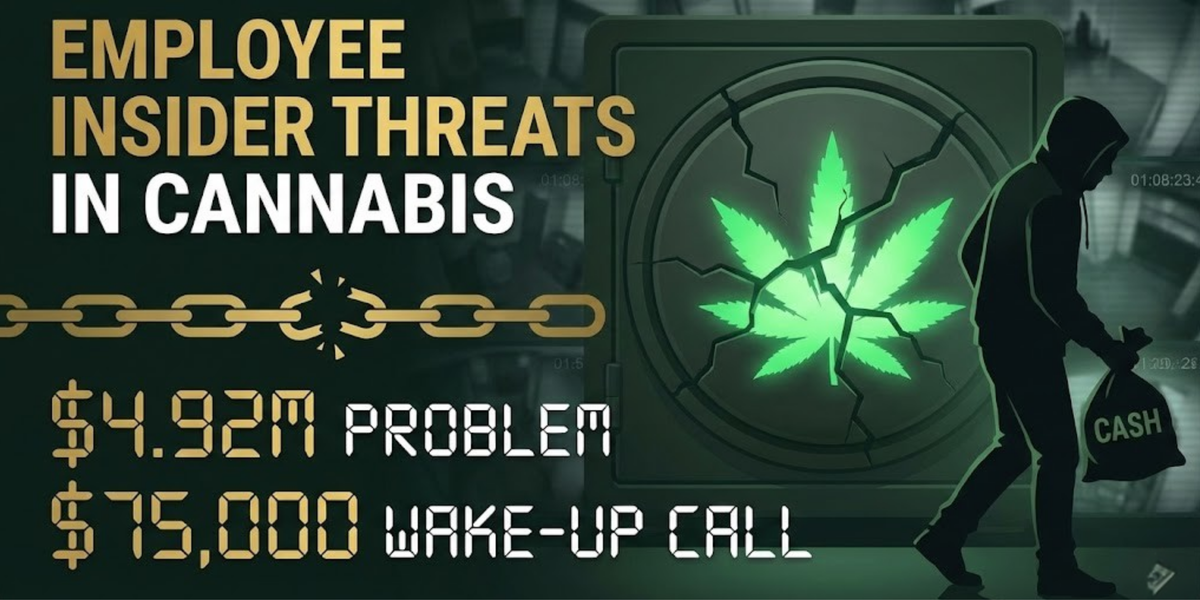
The $75,000 Wake-Up Call
The budtender arrived for her shift on a Tuesday morning. The vault was unlocked—a rare oversight by the closing manager the night before. She glanced at the security camera. Then at the stacks of cash
. Three minutes later, she walked out with $75,000.
The dispensary didn't discover the theft until reconciliation that evening. By then, she'd vanished.
This isn't a hypothetical scenario. This actually happened at a Colorado dispensary, documented by security consultant Dan Owens. It's one of thousands of insider theft incidents that occur across the cannabis industry each year.
Here's what makes it worse: 90% of all product and financial loss in cannabis comes from employee theft, according to security experts who work specifically with cannabis companies.
Not armed robberies. Not break-ins. Your own employees.
The Numbers Cannabis Operators Don't Want to Face
Before we dive into solutions, let's confront the uncomfortable reality:
The Financial Impact
Cross-industry insider threat costs (2025-2026):
- Malicious insider attacks: $4.92 million average cost (highest among all threat vectors)
- Insider error/negligence: $3.62 million average cost
- Total insider threat annual cost: $15.4 million average per organization
- North America specifically: $22.2 million average (doubled from $11.1M in six years)
Cannabis-specific realities:
- 90% of cannabis financial/product loss = employee theft (security industry consensus)
- $20,000-$50,000 = average loss per cannabis theft incident (Wharton School of Business)
- Only 10% of cannabis product loss from external theft (armed robberies, break-ins)
- 81 days = average time to detect insider threat incident
The Human Factor
60% of all breaches include the human element across all industries:
- Error (accidental insider threats)
- Privilege misuse
- Stolen credentials
- Social engineering
Cannabis amplifies every one of these risks because:
- You're handling large amounts of cash daily
- You're storing high-value, consumable products
- You employ part-time, often entry-level workers
- You can't use traditional banking security infrastructure
- Many employees feel underpaid relative to product value
Why Cannabis is Uniquely Vulnerable to Insider Threats
Cannabis doesn't just have the same insider threat problems as other industries—it has additional unique vulnerabilities that make employee theft exponentially more likely:
1. The Cash-Only Curse
The federal banking problem:
- Cannabis remains federally illegal (Schedule I, pending rescheduling)
- Banks risk losing FDIC insurance by serving cannabis businesses
- Result: Most dispensaries operate primarily in cash
What this means:
- Daily cash on hand: Missouri dispensaries average $19,000/day in cash sales
- Cash is untraceable (unlike credit card transactions that leave digital trails)
- Cash is immediately usable (stolen product requires resale; cash doesn't)
- Cash creates instant gratification for theft (no fence, no buyer needed)
Real impact: When a budtender pockets $200 from a cash drawer, there's often no immediate detection. They can do this repeatedly, compounding losses before anyone notices.
2. Product That Walks Away Easily
Cannabis is uniquely stealable:
- Small & portable: Flower fits in pockets, backpacks, purses
- High street value: $200-$400/ounce retail, easy to resell for $100-$150
- Consumable: Unlike stolen electronics, employees can use it themselves
- Light penalties: In many states, selling small amounts illegally = minimal punishment
- Built-in buyer network: Employees already know people who want cannabis
Inventory diversion methods:
- Pocketing flower during restocking
- "Sweethearting" (giving free product to friends at register)
- Falsifying inventory counts to hide theft
- Stealing concentrates/edibles (higher value, smaller size)
- Taking trim/shake (lower visibility, still valuable)
3. Workforce Demographics Create Risk
Cannabis industry employment reality:
- Part-time workers dominate dispensary staffing
- Entry-level positions with limited career growth
- Lower wages relative to product handled ($15-$18/hour handling $10K+ product daily)
- High turnover (industry standard 60-80% annually)
- Young workforce (18-30 age group common)
Psychology of theft in cannabis: "A lot of them are underpaid, so they feel that they're owed something, quite frankly, and so they steal product." - Dan Owens, cannabis security consultant
Employees justify theft mentally:
- "The company makes tons of money, they won't miss this"
- "I'm paid minimum wage to handle thousands of dollars—I deserve this"
- "Everyone else is doing it" (normalization when theft isn't caught)
- "It's just weed, not like stealing money" (product theft feels less severe)
4. Access Control Failures
Cannabis security focuses outward, not inward:
- Extensive surveillance pointed at customers and perimeter
- Alarm systems for break-ins after hours
- Vault requirements for overnight storage
- But: Minimal monitoring of employee behavior during shifts
Common access control gaps:
- Badge sharing between employees (violates regulations, rarely enforced)
- Shared vault/safe combinations (multiple employees know codes)
- Limited monitoring of restricted areas (back rooms, grow areas, storage)
- Weak offboarding procedures (terminated employees retain building access)
5. Detection Difficulty
Why insider threats are harder to catch than external:
- Authorized access: Employees are supposed to handle cash and product
- Knowledge of systems: They know camera blind spots, shift change vulnerabilities, inventory processes
- Trust: Managers assume employees are honest until proven otherwise
- Gradual theft: Small, repeated thefts ($50-$200) are harder to detect than one large theft
- Poor inventory tracking: Many cannabis operators lack sophisticated POS/inventory integration
Detection timeline: Average 81 days to detect insider threat incidents. In cannabis, this could mean thousands of dollars stolen before discovery.
 CannaSecure
The Three Types of Cannabis Insider Threats
Not all employee threats are the same. Understanding the categories helps you build targeted defenses:
Type 1: The Negligent Insider (55% of incidents)
Who they are:
- Not malicious—careless, poorly trained, or distracted
- Accidentally create security risks through poor practices
- Most common type of insider threat
Cannabis-specific examples:
- Budtender leaves cash drawer unlocked during bathroom break
- Employee writes down vault combination on paper, leaves in break room
- Staff member takes customer data home on USB drive (violates HIPAA)
- Worker accidentally texts dispensary address/cash pickup times to wrong person
- Employee falls for phishing email, compromises POS credentials
Why it happens:
- Insufficient training on security protocols
- "Security fatigue" (too many rules, employees stop caring)
- Rushed onboarding (start working before fully trained)
- High turnover = constantly training new staff
- Part-time workers less invested in security culture
Cost: Average $3.62 million per negligent insider breach (cross-industry)
Type 2: The Malicious Insider (25% of incidents)
Who they are:
- Intentionally harmful—theft, sabotage, data theft
- Motivated by personal financial gain (89% of malicious insider cases)
- Financially stressed or disgruntled employees most common
Cannabis-specific examples:
- Employee facilitates armed robbery (texts accomplices "all clear")
- Budtender systematically pockets $50-$200/shift from cash drawer
- Worker steals flower, resells on street for extra income
- Disgruntled employee deletes inventory records before quitting
- Staff member steals customer database, sells to competitors
Why it happens:
- Financial stress (employee struggling to pay bills)
- Feeling underpaid (handling $20K/day, earning $15/hour)
- Disgruntled (passed over for promotion, scheduling conflicts)
- Opportunity (sees weak controls, believes they won't get caught)
- Normalization (saw others steal without consequences)
Cost: Average $4.92 million per malicious insider breach (cross-industry)
Cannabis reality: $20,000-$50,000 average loss per cannabis theft incident
Type 3: The Compromised Insider (20% of incidents)
Who they are:
- Credential theft victims—external attacker steals employee logins
- Employee credentials used for unauthorized access
- Often doesn't realize they've been compromised
Cannabis-specific examples:
- Phishing email steals dispensary manager's login credentials
- Attacker uses stolen credentials to access POS system remotely
- Compromised account changes inventory records to hide external theft
- Stolen admin credentials grant access to security camera feeds
- Metrc/BioTrack credentials stolen, used to manipulate seed-to-sale tracking
Why it happens:
- Employees reuse passwords across personal and work accounts
- Phishing emails targeting cannabis businesses ("Urgent Metrc update")
- Weak password policies (no MFA, short passwords allowed)
- Employees working from personal devices (home computers, phones)
- Public WiFi use for work tasks
Cost: Average $4.67 million for credential compromise breaches
Real Cannabis Insider Threat Incidents
Let's look at documented cases to understand how these threats actually manifest:
Case Study 1: The Facilitator
Location: Colorado dispensary
Incident: Employee-facilitated armed robbery
What happened:
A budtender working the front counter texted two armed accomplices "all clear" three seconds before they entered. The men, armed with handguns, knew exactly where to go and what to take. Total loss: $25,000 in cash and product.
Investigation revealed the employee had been planning the robbery for weeks, providing inside information about:
- Daily cash amounts and patterns
- Security camera coverage and blind spots
- Manager schedules (when experienced staff were absent)
- Vault access procedures
Why it succeeded: Internal knowledge + external execution. The employee knew the vulnerabilities; accomplices exploited them.
Source: Dan Williams, CEO of Canna Security America
Case Study 2: The Opportunist
Location: Colorado dispensary
Incident: Unlocked vault theft
What happened:
Closing manager forgot to lock vault overnight. Opening budtender discovered this during opening procedures. Instead of reporting it, she walked in, took $75,000 in cash, and never returned.
Why it succeeded:
- Single point of failure (one unlocked door)
- No real-time vault monitoring
- Employee had legitimate reason to be near vault (opening procedures)
- Cash immediately usable (no need to fence stolen goods)
Detection: Theft discovered during evening reconciliation—8+ hours later
Source: Dan Owens, cannabis security consultant
Case Study 3: The Systematic Skimmer
Location: California dispensary
Incident: Long-term cash skimming
What happened:
Budtender systematically pocketed $50-$200 per shift over 6 months. Total estimated loss: $18,000-$30,000.
Method:
- Rang up transactions but voided them after customer left
- Pocketed cash from voided transactions
- Occasionally gave "discounts" to friends (no charge, took cash)
- Timed thefts during busy periods (harder to track individual transactions)
Why it succeeded: Small amounts over time are harder to detect than one large theft
Detection: Discovered during annual inventory audit when cash-to-sales ratios showed persistent discrepancies
Cost beyond theft: Investigation time, forensic accounting, potential regulatory penalties for inaccurate tracking
Case Study 4: The Product Diverter
Location: Washington State cultivation facility
Incident: Inventory manipulation and product theft
What happened:
Cultivation worker systematically stole 1-2 ounces of flower per week over 18 months. Total estimated loss: $40,000+ in product value.
Method:
- Falsified trim/waste records (recorded more waste than actual)
- Took flower during harvesting (hardest time to track individual plants)
- Stored stolen product in personal vehicle in parking lot
- Resold to personal network outside seed-to-sale tracking
Why it succeeded:
- Cultivation facilities have hundreds/thousands of plants
- Tracking individual flower amounts during processing is imprecise
- Employee had legitimate access to all grow areas
- Waste disposal creates accounting gray area
Detection: Discrepancy discovered when yield per plant significantly lower than industry averages
Case Study 5: The Credential Compromise
Location: Multi-state cannabis operator
Incident: Metrc credential theft via phishing
What happened:
Cultivation manager received phishing email disguised as "Urgent Metrc System Update." Clicked link, entered credentials. Attacker used stolen credentials to:
- Access Metrc seed-to-sale tracking across 4 facilities
- Manipulate inventory records to hide external theft
- Create phantom transfers between facilities
Discovery timeline: 45 days after initial compromise
Cost:
- Direct theft losses: $85,000 in diverted product
- Regulatory investigation: $30,000 in legal fees
- Metrc audit remediation: $15,000
- Reputational damage: Regulatory scrutiny on all facilities
Why it succeeded: Legitimate credentials granted full system access with no secondary verification
 CannaSecure
The Real Cost of Insider Threats in Cannabis
The direct theft amount is just the beginning. Let's break down the total cost of a cannabis insider threat incident:
Direct Costs
Immediate losses:
- Stolen cash (average $5,000-$50,000 per incident)
- Stolen product (retail value, often $10,000-$40,000)
- Damaged property (broken safes, destroyed locks, vandalized systems)
Investigation Costs
Discovery and response:
- Forensic accounting: $10,000-$25,000
- Legal counsel: $15,000-$50,000
- Private investigator: $5,000-$15,000
- Forensic IT (if digital theft): $8,000-$20,000
- Employee time (management investigating instead of operating): $5,000-$10,000
Regulatory Costs
Cannabis-specific penalties:
- State regulatory investigation: $10,000-$50,000 (legal fees, staff time)
- Inventory discrepancy fines: $5,000-$25,000 per occurrence
- HIPAA violations (medical dispensaries): $100-$50,000 per violation
- License suspension risk: Potential complete business loss
- Mandatory corrective action plans: $15,000-$40,000 implementation
Operational Disruption
Business impact:
- Increased surveillance/security: $20,000-$60,000 (system upgrades)
- Enhanced inventory controls: $10,000-$30,000 (new POS/tracking software)
- Employee morale damage: Reduced productivity, increased turnover
- Management distraction: Weeks of time diverted from growth to crisis
- Lost opportunity cost: Unable to focus on expansion, new products, etc.
Reputational Damage
Long-term consequences:
- Customer trust erosion: "If they can't track their own product, how do I know what I'm buying?"
- Regulatory scrutiny: State auditors increase inspection frequency
- Insurance premium increases: 20-40% premium hikes common
- Vendor relationship damage: Suppliers question your operational controls
Total Cost Example
Mid-size dispensary insider theft incident:
Direct theft: $30,000 (cash + product)
Investigation: $40,000 (forensics, legal, IT)
Regulatory response: $25,000 (fines, corrective action)
Operational changes: $45,000 (new systems, enhanced security)
Reputational/insurance: $20,000 (increased premiums, lost sales)

TOTAL INCIDENT COST: $160,000

For $30,000 in stolen cash/product.

That's a 5.3x multiplier on the direct theft amount.
Detection timeline impact:
- Incidents detected <31 days: $10.6M average cost
- Incidents detected 31-90 days: $15.2M average cost
- Incidents detected >91 days: $18.7M average cost
Every day of undetected insider threat activity increases your cost.
Prevention: The Eight-Layer Cannabis Insider Threat Defense
Here's how to actually prevent insider threats—not just detect them after damage is done:
Layer 1: Hire Right (Pre-Employment Controls)
Background checks (cannabis-specific):
- Criminal history: Standard across all states
- Employment verification: Confirm past positions (catch resume fraud)
- Reference checks: Actually call references, ask behavioral questions
- Credit checks: Financial stress correlates with theft risk
- Cannabis-specific: Check if applicant was terminated from prior cannabis job
Interview red flags:
- Overly focused on compensation/benefits (may indicate financial stress)
- Vague about reasons for leaving prior positions
- Defensive when asked about handling money/product
- Limited long-term career goals (may not be invested)
Cannabis industry reality check:
- 60-80% annual turnover means you're constantly hiring
- Part-time positions attract transient workers
- Entry-level wages limit candidate quality
- Solution: Invest in thorough hiring even for entry-level roles—savings from preventing one theft pays for year of background checks
Tools:
- Background check services: $50-$100/candidate (worth it)
- Behavioral interview training: Teach managers to spot risk indicators
- Reference check scripts: Standardized questions to identify past theft/policy violations
Layer 2: Train Obsessively (Security Culture)
Day 1 onboarding (security-first):
- Security policies BEFORE job tasks
- Clear consequences for theft (immediate termination + prosecution)
- Explanation of surveillance systems (employees know they're monitored)
- Cash handling procedures
- Product handling procedures
- Access control rules
Ongoing training (minimum quarterly):
- Phishing awareness (cannabis-targeted social engineering)
- Password security (unique passwords, MFA importance)
- Physical security (vault procedures, badge security)
- Suspicious behavior reporting ("see something, say something")
- Regulatory compliance (why accurate tracking matters)
Scenario-based training:
- "What do you do if you find the vault unlocked?"
- "A friend asks for a discount—how do you respond?"
- "You receive an urgent Metrc email requesting login—what's your first step?"
- "You notice another employee pocketing product—what do you do?"
Training effectiveness:
- Companies with strong training: 40% fewer employee-caused incidents
- Organizations with insufficient training: 37% cite it as top driver of insider threats
Tools:
- CyberTemplates.com: Employee security training materials adapted for cannabis
- Cannabis-specific compliance training: State regulatory requirement content
- Testing/certification: Verify employees actually learned material
Layer 3: Access Control (Least Privilege)
Principle: Employees get ONLY the access they need to do their job.
Role-based access examples:
- Budtenders: Register access, product viewing only (no inventory adjustments)
- Shift supervisors: Cash reconciliation, vault access during scheduled shifts only
- Inventory managers: Full seed-to-sale system access, product movement authorization
- Owners/GMs: Full system access, audit logs, financial reports
Physical access control:
- Badge systems (not keys—keys can be copied)
- Time-restricted access (budtender badge works 9 AM - 6 PM only, not 2 AM)
- Dual-person requirements for high-value areas (vault requires 2 people simultaneously)
- Automatic deprovisioning (system removes access automatically upon termination)
Digital access control:
- Unique credentials (no shared passwords—ever)
- Multi-factor authentication (MFA) required for all systems
- Session timeouts (force re-authentication after 30 minutes inactive)
- Remote access restrictions (no POS/Metrc access from home networks)
Vault/safe procedures:
- Dual-person access (manager + second employee both required)
- Combination rotation (change codes monthly, always after termination)
- Timed access (safe only opens during specified hours)
- Video recording (camera inside vault recording all access)
Cannabis-specific access challenges:
- Small teams = fewer employees to implement dual-person controls
- Irregular schedules = hard to enforce time restrictions
- Part-time workers = need access during varied shifts
- Solution: Invest in technology (biometric locks, automated access control) to supplement small staff
Layer 4: Monitoring & Surveillance (Detection)
Video surveillance (cannabis-mandated, but optimize it):
- State requirements: Minimum camera coverage, retention periods, resolution
- Go beyond minimum: Add cameras specifically for employee monitoring
- Key areas to monitor: Cash registers, vault/safe access, inventory storage, employee break areas (where product could be stashed), loading docks (product theft during delivery)
AI-powered video analytics:
- Detect "loitering" near high-value areas (employee spending unusual time near vault)
- Object removal detection (plant disappears from grow area)
- Cash drawer monitoring (detect hand movements suggesting skimming)
- Unusual after-hours access (alerts when badge used outside normal hours)
POS transaction monitoring:
- Excessive voids/refunds (red flag for skimming)
- Discount patterns (employee consistently giving discounts to same customers)
- Transaction timing (very fast transactions may skip proper scanning)
- "Sweethearting" detection (same customer always served by same employee)
Inventory tracking:
- Automated alerts for discrepancies (expected vs. actual counts)
- Waste/trim tracking (unusually high waste = potential diversion)
- Yield per plant monitoring (cultivation—detect product theft during harvest)
- Real-time seed-to-sale integration (Metrc/BioTrack automatically updated)
Network/system monitoring:
- Login monitoring (failed login attempts, unusual login times)
- Privilege escalation alerts (user trying to access unauthorized systems)
- Data exfiltration detection (large downloads of customer data)
- Metrc API monitoring (unusual seed-to-sale changes)
Cannabis industry challenge: Small margins mean limited security budgets Solution: Prioritize monitoring systems with high ROI—AI analytics, POS monitoring cost far less than losses from undetected theft
Layer 5: Cash Controls (The Big Target)
Daily cash handling procedures:
- Dual-person counts: Two employees count together, both sign log
- Frequent drops: Limit register cash to $500-$1,000 max, drop excess to vault
- Armored transport: Use licensed armored car services for bank deposits
- Randomized schedules: Vary deposit times/days (prevent pattern recognition)
Cash reconciliation:
- Shift reconciliation: Count drawer at every shift change
- Daily reconciliation: Manager counts all cash end of day
- Video review: If discrepancy, review video of that shift's transactions
- Discrepancy limits: Set tolerance ($20 over/under acceptable), anything beyond triggers investigation
Cash storage:
- Safes during shifts: Drop safes with time delays (can't be opened immediately)
- Vaults after hours: State-mandated vault requirements
- Combination security: Change codes monthly, never write them down
- Cash limits: State limits on cash on-hand often defined in regulations
Cannabis banking alternatives:
- Cashless ATM systems: Process as ATM withdrawals (security risk but reduces cash volume)
- Check/money order: Not ideal but reduces cash
- Cannabis banking partners: Limited but growing—SAFER Banking Act may help
- Cryptocurrency: Some dispensaries experimenting (volatility risk)
Audit trail:
- Every cash movement logged (who, when, amount)
- Video correlation (match cash movements to video timestamps)
- Monthly spot audits (surprise counts by owner/external auditor)
Layer 6: Inventory Controls (Product Protection)
Seed-to-sale tracking integration:
- Real-time Metrc/BioTrack updates: POS system automatically updates state tracking
- Automated alerts: System flags discrepancies immediately (not days/weeks later)
- RFID/barcode tracking: Every plant, package tracked individually
- Manifest verification: Delivery driver confirms manifest matches physical product
Physical inventory procedures:
- Cycle counts: Count subset of inventory daily (full count quarterly)
- Dual-person verification: Two employees independently count, compare results
- Blind counts: Counter doesn't see expected quantity (reduces fudging numbers)
- Variance investigation: Any discrepancy >1% triggers immediate investigation
Product security:
- Limited access: Only authorized employees enter vault/inventory areas
- Cameras everywhere: Every shelf, storage area monitored
- AI object detection: System detects when product removed from shelf
- Exit searches: Bag checks for employees leaving (contentious but effective)
Waste management:
- Witnessed destruction: Cannabis waste destroyed with witnesses present
- Video documentation: Record waste destruction process
- Waste logs: Detailed tracking of all waste amounts
- Third-party disposal: Licensed waste disposal company with chain of custody
Layer 7: Culture & Incentives (Positive Controls)
Pay competitively:
- Above-market wages: Reduce financial stress that motivates theft
- Performance bonuses: Reward accuracy, compliance, zero inventory discrepancies
- Profit-sharing: Employees invested in business success less likely to steal
Career development:
- Advancement paths: Budtender → Shift Supervisor → Manager (reduces "dead-end job" mentality)
- Training investment: Send employees to industry conferences, certification programs
- Recognition programs: Employee of the month, compliance champion awards
Anonymous reporting:
- Hotline or app: Employees can report suspected theft anonymously
- No retaliation policy: Clearly communicated, enforced
- Reward program: Bonus for reports leading to prevention of theft
Transparency:
- Share security metrics: "We prevented 3 theft attempts this quarter through your vigilance"
- Explain why rules exist: Connect security procedures to protecting everyone's jobs
- Regulatory education: Help employees understand license risk from poor compliance
The psychology: Employees who feel valued, fairly compensated, and invested in success are far less likely to steal. This doesn't eliminate malicious insiders, but dramatically reduces opportunistic/justification-based theft.
Layer 8: Response & Recovery (When Prevention Fails)
Incident response plan (before theft occurs):
- Defined roles (who investigates, who contacts police, who handles HR)
- Evidence preservation procedures (don't contaminate investigation)
- Legal notification requirements (when to call attorney)
- Regulatory reporting obligations (state cannabis board, HIPAA if medical)
- Communication plan (staff, customers, media if necessary)
Investigation procedures:
- Preserve evidence: Video footage, transaction logs, inventory records
- Document timeline: When theft likely occurred, when discovered
- Interview witnesses: Separate interviews, document statements
- Law enforcement: File police report (required for insurance claim)
- Forensic analysis: If digital theft, preserve systems for forensics
Employee termination:
- Immediate: Don't give advance notice (risk of further theft/sabotage)
- Revoke access: All badges, keys, credentials disabled before conversation
- Witnessed termination: HR + manager present, security nearby
- Final paycheck only: No severance for theft
- Prosecution: Press charges (deters future employees from considering theft)
System remediation:
- Change all codes/passwords: Vault, safe, admin credentials
- Review access logs: Identify if others were involved
- Enhanced monitoring: Increase surveillance in affected areas
- Policy updates: Address gaps that enabled the theft
Insurance claims:
- Crime insurance: Covers employee theft (if you have coverage)
- Documentation required: Police report, investigation records, loss calculations
- Claims timeline: 30-60 days typical
- Premium impact: Expect increases after claim
Tools:
- IncidentResponse.tools: Pre-built cannabis incident response playbooks
- Legal counsel: Have attorney on retainer before incident occurs
- Forensics contacts: Know who to call for digital/financial forensics
The CISO Marketplace Insider Threat Prevention Stack
Building insider threat defenses requires multiple tools working together. Here's the complete stack:
Policy & Compliance Tools
- Generate employee security policies
- Acceptable use policies
- Cash handling procedures
- Access control policies
- Cannabis-specific compliance policies
- 💰 Code:
CISO20- 20% OFF site-wide savings
- Policy maintenance and version control
- Regulatory change tracking (state-specific)
- Annual policy review automation
- Complete policy suite management
- 💰 Codes:
CISO30- 30% OFF for first-time buyers (expires 2026-12-31)CISO15- 15% OFF for CISO Marketplace members
- Pre-built policy templates
- Per-policy purchases
- Industry-specific policies
- 💰 Code:
CISO20- 20% OFF per policy
Training & Implementation
- Employee security training materials
- Cannabis-specific scenarios
- Phishing awareness training
- Incident response runbooks
- Onboarding checklists
- 💰 Codes:
CISO30- 30% OFF first-time subscriptions (one-time use, expires 2026-12-31)CISO20- 20% OFF token packages forever
Assessment & Validation
- Security posture assessment
- Insider threat risk evaluation
- Compliance gap analysis
- Continuous monitoring tools
- 💰 Code:
CISO25- 25% OFF annual subscription
InsiderThreatMatrix.SecurityCareers.help
- MITRE ATT&CK-style insider threat framework
- Threat actor tactics and techniques
- Detection and mitigation strategies
- Cannabis-applicable threat scenarios
InsiderRisk.SecurityCareers.help
- Insider risk assessment framework
- Risk scoring and prioritization
- Employee risk indicators
- Continuous risk monitoring
All Available Through CISO Marketplace
👉 Explore the complete CISO Marketplace ecosystem →
👉 View all active insider threat prevention deals →
Your Cannabis Insider Threat Prevention Checklist
Use this checklist to assess your current defenses:
☐ Pre-Employment Controls
- [ ] Comprehensive background checks for all employees
- [ ] Credit checks for cash-handling positions
- [ ] Cannabis industry-specific employment verification
- [ ] Behavioral interview training for hiring managers
- [ ] Reference checks with standardized questions
☐ Employee Training
- [ ] Security-first onboarding (before job training)
- [ ] Quarterly security awareness training
- [ ] Phishing simulation exercises
- [ ] Scenario-based insider threat training
- [ ] Annual refresher on cash/product handling
☐ Access Control
- [ ] Role-based access (least privilege principle)
- [ ] Badge-based physical access control
- [ ] Multi-factor authentication (MFA) on all systems
- [ ] Time-restricted access for employees
- [ ] Dual-person requirements for high-value areas
- [ ] Automated access revocation on termination
☐ Monitoring & Surveillance
- [ ] Video surveillance exceeds state minimums
- [ ] AI-powered analytics (object detection, behavior analysis)
- [ ] POS transaction monitoring for red flags
- [ ] Automated inventory discrepancy alerts
- [ ] System login monitoring (unusual access patterns)
☐ Cash Controls
- [ ] Dual-person cash counts (all shifts)
- [ ] Frequent drops to safe/vault (minimize register cash)
- [ ] Video-recorded reconciliation procedures
- [ ] Armored car service for bank deposits
- [ ] Randomized deposit schedules
☐ Inventory Controls
- [ ] Real-time seed-to-sale integration
- [ ] Daily cycle counts (subset of inventory)
- [ ] Dual-person inventory verification
- [ ] RFID/barcode tracking for all products
- [ ] Automated variance investigation triggers
- [ ] Witnessed waste destruction with video
☐ Culture & Incentives
- [ ] Competitive wages (above market rates)
- [ ] Performance bonuses for compliance
- [ ] Clear career advancement paths
- [ ] Anonymous reporting hotline
- [ ] Recognition programs for vigilance
☐ Incident Response
- [ ] Written insider threat response plan
- [ ] Evidence preservation procedures
- [ ] Law enforcement contacts (pre-established)
- [ ] Legal counsel on retainer
- [ ] Insurance coverage for employee theft
- [ ] Post-incident review process
The Uncomfortable Truth About Cannabis Insider Threats
Let me end with brutal honesty:
You will experience employee theft.
Not "if"—when.
90% of cannabis financial/product loss comes from insiders. If you're operating a dispensary, cultivation facility, or any cannabis business with employees, you are statistically certain to be targeted by insider threats.
The question isn't whether it will happen. The question is:
Will you detect it in 30 days (containable) or 180 days (catastrophic)?
Will it be $2,000 in stolen product (operational bump) or $75,000 in cash (business-ending)?
Will you have systems in place that deter 90% of opportunistic theft before it happens?
The Math is Clear
Prevention investment:
- Comprehensive background checks: $2,000-$5,000/year
- Enhanced training program: $3,000-$8,000/year
- Upgraded surveillance/monitoring: $15,000-$30,000 (one-time)
- Improved access controls: $10,000-$20,000 (one-time)
- Total Year 1: $30,000-$63,000
Cost of one undetected insider theft:
- Direct theft: $20,000-$50,000 (average)
- Investigation/remediation: $40,000-$80,000
- Regulatory consequences: $15,000-$50,000
- Operational disruption: $20,000-$40,000
- Total: $95,000-$220,000
Prevention pays for itself with ONE prevented theft.
And you're not preventing just one—you're preventing the dozens of small thefts that never get caught, the systematic skimming that compounds over months, the facilitated robbery that could cost lives.
What To Do Next
This week:
- Review your hiring procedures (are you doing thorough background checks?)
- Assess your cash controls (dual counts? Frequent drops? Video reconciliation?)
- Check your access management (who has vault access? badge sharing happening?)
- Evaluate surveillance coverage (are you monitoring employees or just perimeter?)
This month:
- Update employee training (add insider threat scenarios)
- Implement POS monitoring (flag voids, discounts, unusual patterns)
- Test access controls (do terminated employee badges still work?)
- Review inventory procedures (when's the last physical count?)
This quarter:
- Conduct insider threat risk assessment (use InsiderRisk.SecurityCareers.help)
- Review threat actor techniques (reference InsiderThreatMatrix.SecurityCareers.help)
- Implement at least 3 new controls from this article
- Update policies using PolicyQuest.DIY or GeneratePolicy.com
- Train management team on insider threat detection
Don't wait for the $75,000 walk-out to start taking insider threats seriously.
Join CannaSecure for Ongoing Insider Threat Intelligence
This article covered cannabis insider threat prevention—but threats evolve constantly.
CannaSecure Dispensary Tier members get:
✅ Monthly insider threat briefings
- New attack patterns in cannabis industry
- Emerging employee theft techniques
- Real incident analysis from recent cases
✅ Cannabis-specific training materials
- Employee security awareness templates
- Scenario-based insider threat exercises
- Management detection training
✅ Implementation guides
- Access control configuration
- POS monitoring setup
- Surveillance optimization
- Inventory tracking best practices
✅ Policy templates
- Employee security policies
- Cash handling procedures
- Incident response plans
✅ Private community + weekly Q&A
- Connect with other cannabis security professionals
- Share insider threat prevention tactics
- Get answers from industry experts
👉 Join CannaSecure Dispensary Tier - $99/month →
Prevent one $20,000 theft and your membership pays for itself for 17 years.
Published January 14, 2026 | Updated January 14, 2026
© 2026 CannaSecure.tech | QSai LLC. All rights reserved.