How to Pass Your First State Cannabis Compliance Audit (2026 Edition)

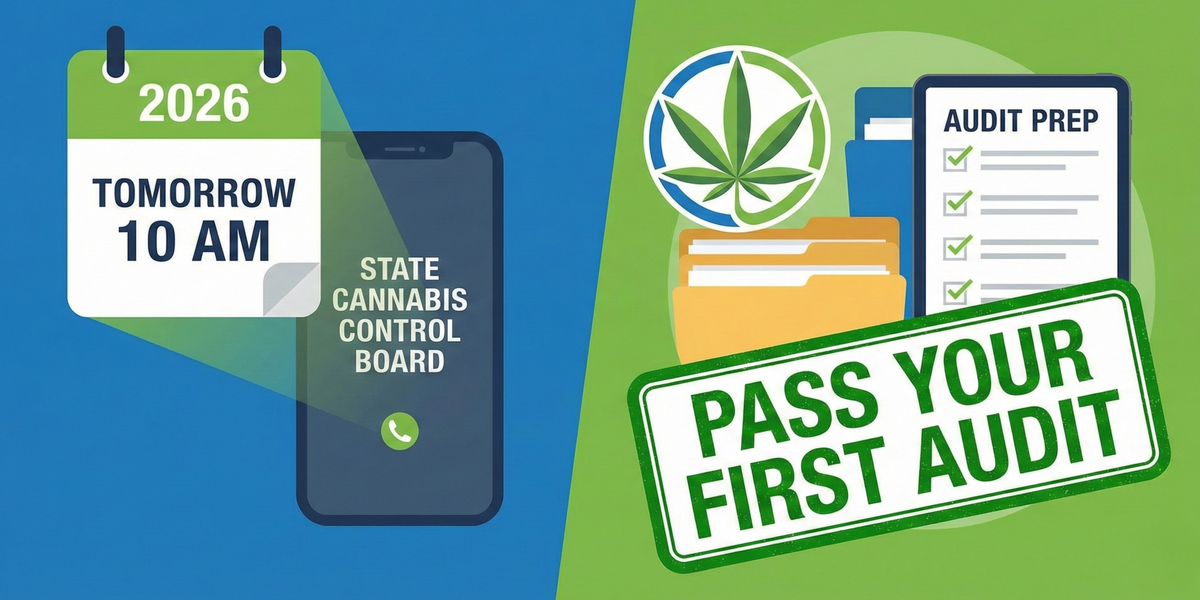
The 24-Hour Notice That Changes Everything
It's Tuesday at 3:47 PM. Your phone rings. It's a number you don't recognize, but the area code matches your state cannabis regulatory agency.
"This is [State Cannabis Control Board]. We're scheduling a compliance inspection of your dispensary for tomorrow at 10 AM. Please have all required documentation ready for review."
Your heart rate spikes. Tomorrow. 10 AM. That's less than 19 hours away.
Do you know where your employee training certificates are? When was the last time you reconciled Metrc? Are your security camera retention logs up to date? Is your vault combination documented? Do your waste disposal records match state requirements?
This isn't a hypothetical. This is exactly how most cannabis compliance audits happen in 2026.
Michigan switched to unannounced inspections. Illinois increased inspection frequency 40%. California issued more violations for paperwork than any other category. Across all states, regulators are tightening enforcement, expanding inspection scope, and reducing tolerance for "minor" violations.
The stakes: License suspension. Product embargo. Fines of $500-$5,000 per violation (with 20+ violations possible in a single audit). Mandatory corrective action plans. Increased future inspection frequency. In worst cases: License revocation.
But here's the good news: Cannabis audits are predictable. Inspectors follow checklists. They look for the same things in every state. The violations are consistent. If you know what they're checking, you can prepare.
This guide will walk you through everything inspectors look for, how to prepare for your first audit, and—most importantly—how to pass.
 CannaSecure
What's Changed in Cannabis Audits (2026)
Before we dive into preparation, understand the enforcement landscape you're entering:
1. Shift to Unannounced Inspections
Old model (pre-2024): Most states gave 24-72 hours notice
New model (2026): Increasing states adopt "walk-in" inspections with zero notice
States with unannounced inspections:
- Michigan (fully transitioned 2025)
- California (for follow-up/complaint investigations)
- Oregon (spot checks)
- New Jersey (random compliance verification)
- New York (increased unannounced frequency)
What this means: You can't "audit prep" the day before anymore. Your operation needs to be audit-ready every single day.
2. Data Integrity is Priority #1
2026 enforcement focus: Seed-to-sale tracking accuracy
Regulators are laser-focused on Metrc/BioTrack discrepancies. Even 1% variance between physical inventory and digital records triggers deeper investigation.
Common violations:
- Inventory counts don't match Metrc
- Waste logs incomplete or inaccurate
- Transfer manifests show discrepancies
- Adjustment irregularities (unexplained inventory changes)
- Reconciliation reports not conducted daily
Why: Data integrity violations suggest potential diversion (illegal sales outside regulated system) or loss of product control—both major red flags.
3. Documentation is No Longer Optional
The new standard: If it's not documented, it didn't happen.
Inspectors now ask for documented proof of everything:
- "Show me your employee training certificates"
- "Where are your waste destruction logs?"
- "Can I see your security system maintenance records?"
- "Do you have SOPs for cash handling?"
States issuing most violations for documentation failures:
- California
- Illinois
- Massachusetts
- New Jersey
- Colorado
4. Cybersecurity Added to Inspection Scope
New in 2026: Illinois, New Jersey, and Massachusetts now include documented information security policies in compliance requirements.
What inspectors check:
- Do you have written cybersecurity policies?
- Are employee credentials protected (no shared passwords)?
- Is customer data encrypted?
- Do you have an incident response plan?
- Have employees received security training?
Trend: Expect more states to add cybersecurity requirements as data breaches increase.
5. Environmental Compliance Gaining Attention
California leads the way, but expect other states to follow:
- Water usage documentation
- Energy consumption reporting (cultivation)
- Waste disposal environmental permits
- HVAC efficiency requirements
Cultivation facilities face increasing scrutiny on environmental stewardship.
6. Workforce Compliance Under Microscope
HR/labor violations are "easy targets" for inspectors:
- Expired employee badges/licenses
- Incomplete personnel files
- Missing background checks
- Wage/hour violations (unpaid breaks, overtime miscalculations)
- Worker misclassification (1099 vs. W-2)
States actively targeting cannabis for labor violations:
- New York
- California
- New Jersey
- Connecticut
Why: Labor violations are easy to find and generate immediate fines.
What Inspectors Actually Check (By Category)
Let's break down exactly what regulators inspect, what they're looking for, and what triggers violations:
Category 1: Licensing & Permits
What they check:
- Current license displayed (required in all states)
- License matches business name and location
- All employees have current agent/employee badges
- Local permits (zoning, business license, health permits)
- Renewal status (license not expired or in grace period)
Common violations:
- ❌ License not visible to public
- ❌ Employee working without valid agent card
- ❌ License expired (even by 1 day)
- ❌ Business operating under different name than licensed
- ❌ Local permits not obtained
How to prepare:
- ✅ License prominently displayed at entrance
- ✅ Digital copies of all licenses/permits in audit folder
- ✅ Employee badge roster with expiration dates
- ✅ Calendar reminders for renewals (90 days, 30 days, 7 days before expiration)
- ✅ Backup copy of license (in case displayed copy damaged)
Inspector question: "Can I see your current license and all employee agent cards?"
Category 2: Age Verification & Purchase Limits
What they check:
- ID checking procedures
- Age gate signage ("21+" or "18+ medical")
- POS system enforces purchase limits
- Transaction logs show age verification
- Underage sale prevention training