The 90% Problem: Why Most Dispensary Theft Comes From Inside—And How to Stop It

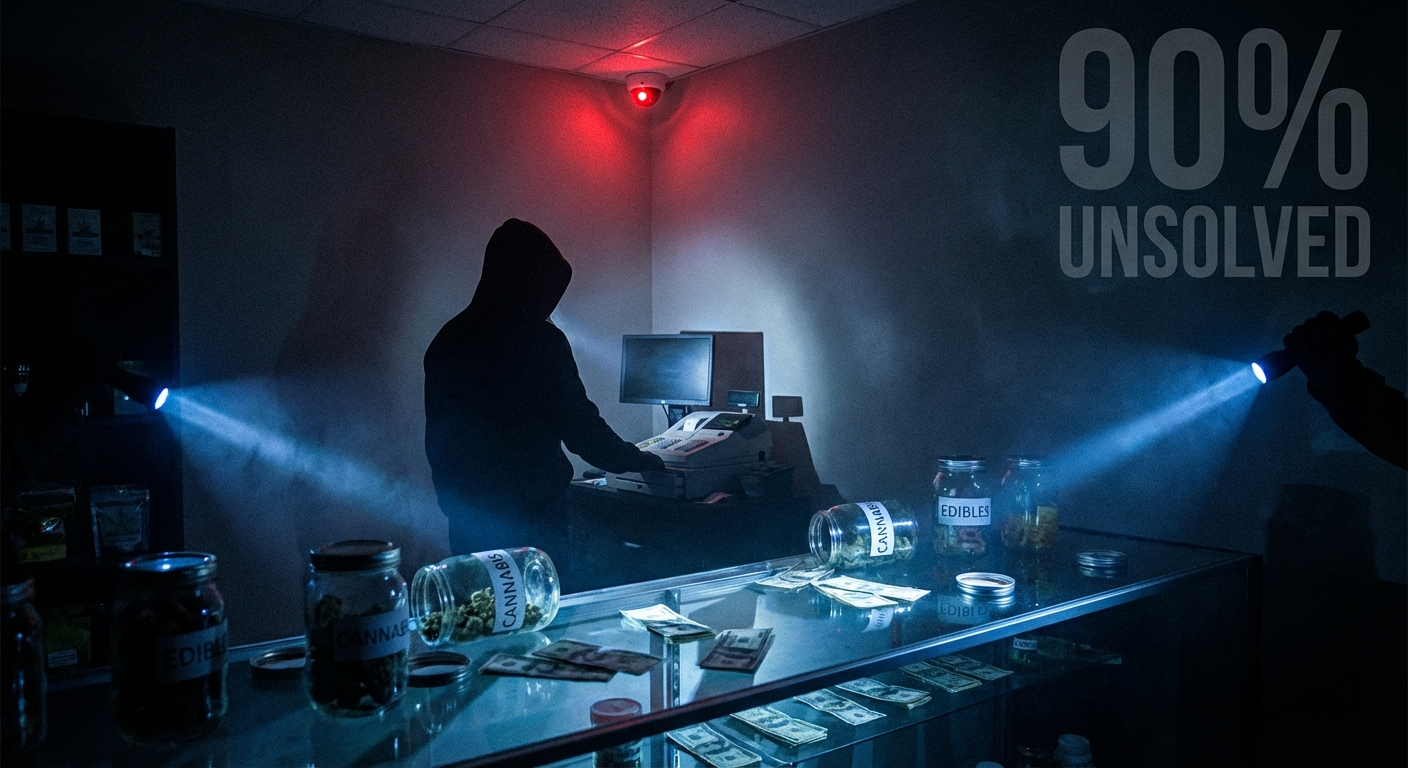
When cannabis retailers think about security threats, armed robberies dominate the headlines. But the real threat is already inside the building—wearing your company shirt and clocking in every day.
The Insider Threat Reality in Cannabis Retail
Here's a statistic that should keep every dispensary owner awake at night: roughly 90% of financial and product loss in the cannabis industry comes from employee theft, according to security experts who work extensively with cannabis businesses.
That's not a typo. Nine out of ten dollars lost to theft in your dispensary likely walked out with someone you trusted enough to hire.
The Association of Certified Fraud Examiners (ACFE) research reinforces this sobering reality—when surveyed, 60% of employees admitted they would steal from their employer if they knew they wouldn't get caught. In an industry that combines high-value portable products with cash-heavy operations, that's a recipe for disaster.
Consider what happened at Green Light Dispensary in Helena, Arkansas. In October 2024, the Arkansas Alcoholic Beverage Control Enforcement Division arrested eight former employees following a lengthy investigation. Their scheme? Using patient allotments belonging to people who were elderly, deceased, out of the area, or incarcerated. The employees were fraudulently dispensing cannabis under these patient accounts—then pocketing or reselling the product.
This wasn't a smash-and-grab robbery. It was a sophisticated fraud scheme that required insider knowledge, access, and months to detect.
Why Dispensaries Are Uniquely Vulnerable
Cannabis retail isn't like selling t-shirts or groceries. Several factors make dispensaries particularly attractive targets for insider theft:
The Cash Problem
Despite years of promises about banking reform, most cannabis dispensaries remain predominantly cash businesses. When banking access is limited, large amounts of cash flow through your store daily. Cash is anonymous, untraceable, and tempting. Unlike credit card transactions that create automatic records, cash can disappear with minimal evidence.
High-Value, Portable Product
Cannabis products are small, lightweight, and valuable. A budtender can slip an eighth into a pocket in seconds. Unlike stealing a television or furniture, there's no awkward bulk to explain. Worse, stolen cannabis has an immediate ready market—the illicit trade that persists alongside legal sales.
Demand Never Sleeps
The black market didn't disappear when legalization arrived. Stolen product from licensed dispensaries can be sold easily, often at prices that undercut legal retail. Your employee doesn't need to find a fence for stolen jewelry—they already know people who want to buy cannabis.
Limited Federal Oversight
Because cannabis remains federally prohibited, there's no FBI compiling national theft statistics or best practices. Each state operates independently, and data sharing is minimal. This fragmentation makes it harder to identify patterns or learn from incidents at other dispensaries.
High Turnover, Low Wages
The cannabis industry is notorious for low wages and reliance on part-time workers. When employees feel undervalued or financially stressed, the temptation to "supplement" their income increases dramatically. High turnover also means constantly training new staff who may not develop loyalty to the business.
Common Insider Theft Schemes
Employee theft in cannabis retail takes many forms. Understanding these methods is the first step to prevention:
1. Product Theft
The most straightforward scheme: employees simply take cannabis products for personal use or resale. This can range from pocketing a pre-roll during shift to systematically siphoning inventory over months. One security consultant documented a case where an employee was caught on camera stealing small amounts—when investigators reviewed footage, they discovered more than 50 instances in a single month, with estimated losses exceeding $20,000.
2. Cash Skimming
Employees handling cash registers can pocket incoming money before it's recorded. Techniques include:
- Not ringing up transactions and pocketing the entire sale
- Underringing items and keeping the difference
- Stealing from the drawer during shift and hoping discrepancies aren't noticed
- Processing false refunds or voids
3. Sweethearting
Employees give unauthorized discounts to friends, family, or themselves. While each transaction might be small, sweethearting adds up quickly. Some employees become bolder over time, eventually giving away products for free or at massive markdowns.
4. Fraudulent Patient Transactions
As the Arkansas case demonstrated, employees can abuse patient records to dispense cannabis under someone else's allotment. Targets often include:
- Deceased patients whose accounts haven't been closed
- Elderly patients who don't actively monitor their records
- Patients who are incarcerated or have moved away
- Patients who rarely use their full allotment
5. Payroll and Time Fraud
Employees clock in early, clock out late, or have friends punch their timecards. While not product theft, this directly steals money from the business. In an industry with thin margins, payroll fraud can be devastating.
6. Vendor Collusion
Some theft requires a partner. Employees may work with delivery drivers or vendors to falsify records—accepting fewer products than invoiced, then splitting the difference. This scheme is particularly difficult to detect without rigorous receiving procedures.
7. Data Theft
Customer lists, purchasing patterns, and supplier information have value. Departing employees may steal this data to give themselves an advantage at a new job or to sell to competitors.
Warning Signs to Watch For
The ACFE has identified behavioral red flags that consistently appear in fraud cases. Train your managers to watch for these indicators:
Financial Stress Signals
- Living beyond means: The budtender making $16/hour but driving a new luxury car
- Financial difficulties: Employees who frequently ask for advances or complain about bills
- Unusual interest in finances: Asking questions about cash handling procedures that aren't part of their job
Behavioral Red Flags
- Control issues: Employees who refuse to take vacation, resist cross-training, or insist on handling certain tasks alone
- Unusually close vendor/customer relationships: Friendships with specific customers or delivery personnel that seem too cozy
- Defensiveness: Overreaction when questioned about procedures or discrepancies
Operational Patterns
- Working odd hours: Employees who consistently arrive early or stay late—especially alone
- Refund patterns: One employee processing an unusual number of refunds or voids, particularly at shift start when no witnesses are present
- Inventory discrepancies: Shrinkage that tracks to specific shifts or employees
- Register variances: Cash drawer shortages that repeat with the same staff
The "Perfect Employee" Paradox
Ironically, some long-term thieves appear to be model employees. They never miss work, always volunteer for overtime, and resist taking time off. Why? Because they can't risk someone else discovering their scheme while they're gone.
Prevention Strategies
Preventing insider theft requires a multi-layered approach combining culture, procedures, and technology.
Hire Right
Background checks are non-negotiable. Work with a professional agency to verify employment history, check for criminal records, and identify resume discrepancies. Pay particular attention to:
- Gaps in employment history
- Reasons for leaving previous positions
- References that can't be verified
- Criminal history involving theft or fraud
Pay Fairly
This is unpopular advice because it costs money—but it works. When employees are financially stable and feel valued, theft becomes less attractive. Consider:
- Competitive wages above minimum
- Full-time positions with benefits when possible
- Profit-sharing or bonus programs tied to store performance
- Opportunities for advancement
A living wage won't eliminate theft, but financial desperation is a major motivator. Removing that pressure reduces your risk.
Establish the Two-Person Rule
No employee should ever be alone with cannabis or cash. Implement policies requiring:
- Two people present during opening and closing
- Dual verification for inventory counts
- Two signatures for any adjustments or write-offs
- Buddy system for vault access
When two people must be involved, accountability multiplies. Neither wants to be implicated if the other steals.
Rotate Duties
Don't let employees become territorial over specific tasks. Regularly rotate:
- Register assignments
- Inventory counting responsibilities
- Receiving duties
- Closing procedures
Rotation prevents any single employee from developing schemes that depend on controlling one part of the operation.
Create Anonymous Reporting Channels
Employees are often the first to notice when a colleague is stealing. But they won't speak up if they fear retaliation. Establish:
- Anonymous tip lines or online reporting forms
- Clear policies protecting whistleblowers
- Regular reminders that reporting suspicious activity is expected and appreciated
When employees know they're being watched by each other—not just cameras—theft becomes riskier.
Conduct Regular, Random Audits
Scheduled audits are easy to game. Supplement them with:
- Surprise inventory counts at random times
- Unannounced cash drawer audits mid-shift
- Periodic review of surveillance footage (not just when problems arise)
- Exception-based monitoring of POS transactions
The message should be clear: any transaction might be reviewed at any time.
Make Consequences Clear—And Enforce Them
Your employee handbook should explicitly address theft policies. Make sure everyone understands:
- Theft results in immediate termination
- The company will pursue criminal charges when appropriate
- All incidents will be reported to state regulators
Then follow through. If you let a theft incident slide, word spreads quickly that there are no real consequences.
Technology and Monitoring Solutions
The right technology stack can dramatically reduce insider theft opportunities while providing the evidence needed when theft does occur.
Cannabis-Specific POS Systems
Modern dispensary POS systems like Flowhub, Cova, and Dutchie offer features specifically designed to prevent fraud:
- Role-based access control: Limit who can process refunds, apply discounts, or adjust inventory. Only managers should have access to sensitive functions.
- Transaction logging: Every action is timestamped and linked to a specific employee login.
- Discount controls: Set maximum discount percentages and require manager overrides for exceptions.
- Void tracking: Flag patterns of unusual voids or refunds for review.
One dispensary operator reported reducing annual loss from 10% to 2% within 90 days of implementing a robust POS system with proper controls configured.
Video Surveillance With POS Integration
Cameras alone aren't enough. The real power comes from integrating video with POS data. Systems like Solink and DTiQ synchronize transaction records with video footage, allowing you to:
- Search by transaction type (show me all refunds from last Tuesday)
- Flag exceptions automatically (transactions over $500, unusual discount patterns)
- Review video of specific transactions instantly
- Generate evidence-quality reports for investigations
This integration transforms your camera system from passive recording to active fraud detection.
Seed-to-Sale Tracking
State-mandated track-and-trace systems like METRC use RFID tags to follow every cannabis product from cultivation through sale. While primarily designed for regulatory compliance, these systems also:
- Create an immutable record of product movement
- Require documentation for any inventory adjustments
- Enable auditors to trace discrepancies to specific points in the chain
- Make it harder to sell diverted product through legitimate channels
Treat your seed-to-sale compliance as a theft prevention tool, not just regulatory overhead.
Smart Safes and Cash Management
Modern smart safes count cash automatically, log every deposit, and can be linked to POS systems. Features include:
- Real-time cash tracking across shifts
- Automatic alerts for discrepancies
- Limited access with individual PINs and biometrics
- Armored car integration for pickups
When cash is counted by machines rather than humans, opportunities for skimming drop dramatically.
AI-Powered Exception Reporting
Advanced analytics platforms use machine learning to identify unusual patterns that humans might miss:
- Employees with statistically unusual refund rates
- Register variances that cluster around specific workers
- Transaction patterns that deviate from store norms
- Inventory shrinkage correlated with schedules
These systems surface problems early, before small theft becomes a major loss.
Building a Culture of Accountability
Technology and procedures matter, but culture is the foundation. The goal isn't just to catch thieves—it's to create an environment where theft feels wrong, risky, and inconsistent with who your team is.
Lead by Example
Owners and managers must model the behavior they expect. If leadership cuts corners on procedures or takes product home casually, employees will follow suit. Conversely, visible commitment to compliance sets the standard.
Make Expectations Explicit
Don't assume new hires understand your policies. During onboarding:
- Review theft policies in detail
- Explain monitoring systems and their purpose
- Discuss consequences clearly
- Have employees sign acknowledgment of policies
Repeat this messaging periodically. People need reminders.
Celebrate Integrity
Recognize employees who demonstrate commitment to accountability:
- Praise workers who catch and report errors
- Acknowledge those who follow procedures even when it's inconvenient
- Create positive reinforcement for honest behavior
When integrity is visibly valued, it becomes part of team identity.
Foster Ownership
Employees who feel like stakeholders are less likely to steal from themselves. Consider:
- Sharing performance metrics with the team
- Explaining how shrinkage affects profitability and ultimately wages
- Including staff in loss prevention discussions
- Empowering employees to suggest improvements
A budtender who understands that every stolen eighth comes out of everyone's potential bonus thinks differently than one who sees inventory as "the company's stuff."
The Bottom Line
The 90% statistic isn't a condemnation of cannabis workers—it's a reflection of human nature combined with unique industry vulnerabilities. Every retail sector faces insider theft, but cannabis dispensaries operate in an environment that amplifies the risk.
The good news: this risk is manageable. Dispensaries that combine thoughtful hiring, fair compensation, robust procedures, modern technology, and a culture of accountability can dramatically reduce their exposure.
The businesses that thrive long-term won't be those that ignore this reality or hope it won't happen to them. They'll be the ones that acknowledge the risk honestly and build systems to address it—protecting not just their profits, but the integrity of the legal cannabis industry as a whole.
Your biggest security investment shouldn't be bigger locks on the door. It should be building a team that never wants to use them against you.
For more cannabis security insights and compliance guidance, follow CannasSecure.tech for regular updates on protecting your dispensary operation.